
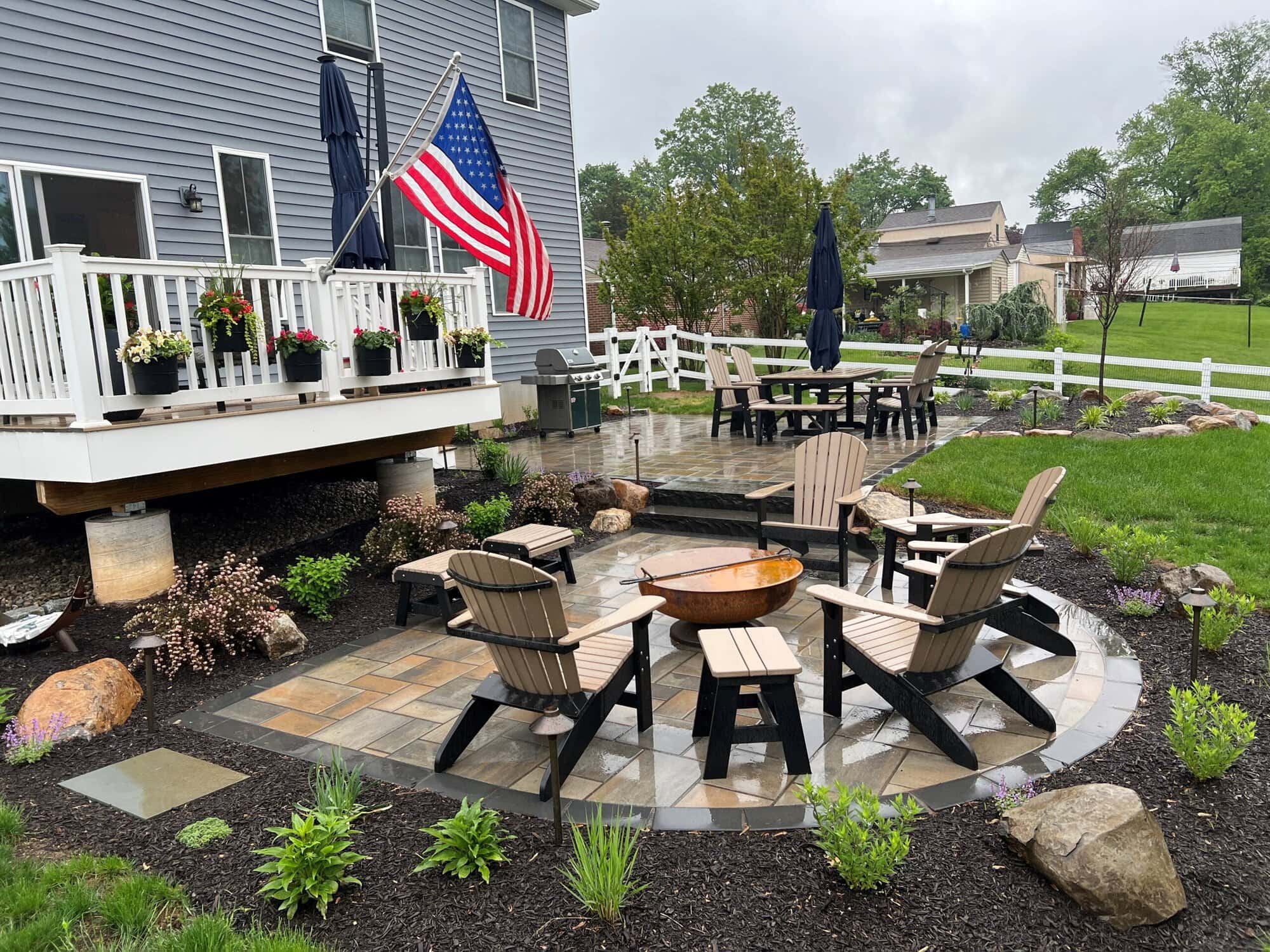
Thinking about transforming your backyard? A little planning now can make a big difference in how much you enjoy your outdoor space for years to come.
Your backyard has the potential to become one of your favorite places at home. Maybe you’re imagining a spacious patio for entertaining, a cozy fire pit for cool evenings, or a peaceful spot to relax after a busy day.
But where do you begin?
With so many possibilities—patios, outdoor kitchens, fire features, walkways, landscaping, and lighting—it can be difficult to know what to include, how everything should fit together, and what your property can accommodate.
At Whitehouse Landscaping, we’ve spent 25 years helping homeowners throughout Montgomery, Chester, and Berks Counties turn their ideas into beautiful, functional outdoor spaces.
Whether you’re planning a complete backyard transformation or starting with one important improvement, here are seven things worth considering before getting started.
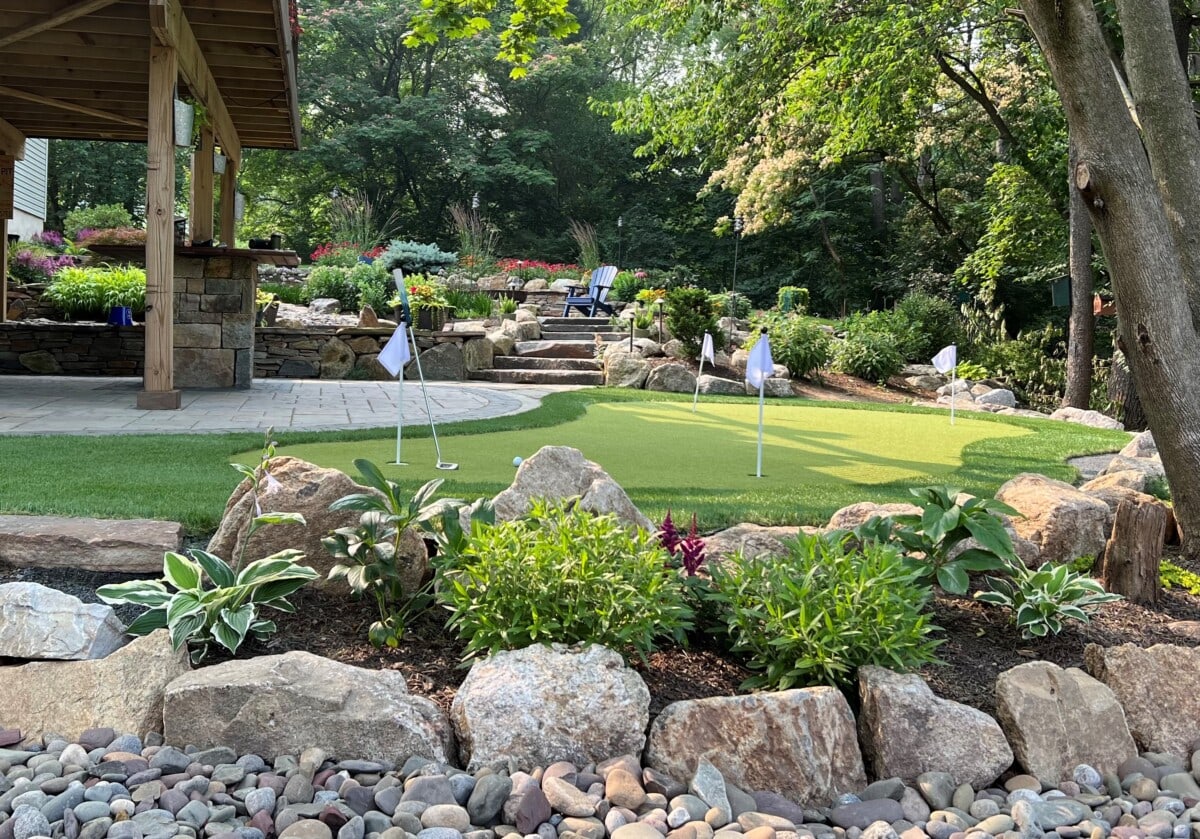
1. Start with How You Want to Use Your Backyard
Before choosing pavers, patio furniture, or a fire pit, think about how you’d like to spend your time outdoors. Do you enjoy entertaining friends and family? Would you love a quiet place to enjoy your morning coffee? Perhaps you’re looking for a space where children and grandchildren can gather, or a comfortable place to unwind at the end of the day.
Your answers will help determine which features make the most sense.
For example:
- Outdoor Dining: A patio with enough room for a dining table, chairs, and comfortable circulation.
- Entertaining: Separate areas for dining, conversation, and gathering around the fire.
- Relaxation: A quiet sitting area surrounded by attractive plantings or a water feature.
- Family Activities: Open lawn areas connected to patios and walkways.
- Evening Enjoyment: Outdoor lighting that makes the space welcoming and easier to navigate after dark.
One of the most important considerations is how these different areas will work together. A thoughtfully designed outdoor living space should feel like a natural extension of your home, not simply a collection of individual features.
A helpful tip: Think about how many people will typically use the space. A patio may look spacious when empty, but dining furniture, lounge chairs, and a grill all require room to move around comfortably.
2. Take a Good Look at Your Property
Every backyard has its own opportunities and challenges.Some properties are relatively level and open. Others have steep slopes, drainage concerns, limited privacy, or awkward transitions between the house and yard.
These conditions should be considered early in the planning process because they can influence everything from patio placement to construction costs.
Here are a few questions worth asking:
- Does your backyard slope away from the house?
- Are there areas where water collects after heavy rain?
- Where does the sun shine during the day?
- Would you like more privacy from neighboring properties?
- How will people move between the house, patio, pool, and lawn?
- Are there existing trees or landscape features you’d like to preserve?
Don’t overlook drainage. Proper grading and water management are essential considerations, particularly when installing patios, retaining walls, and other hardscape features. Addressing these concerns during the design phase can help prevent expensive problems later.
Sometimes the most challenging part of a property becomes one of its most attractive features.
A Real-Life Example: Working With a Hillside
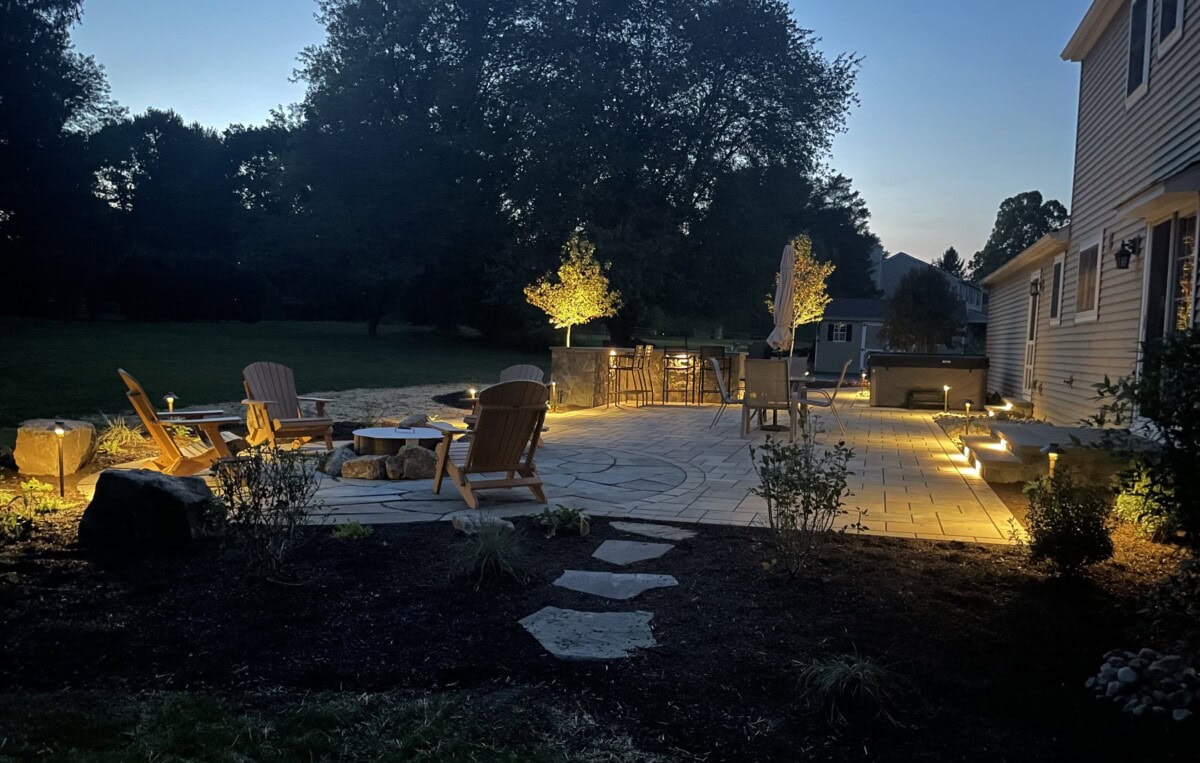
At one of our projects in Douglassville, PA, a steep hillside separated different areas of the property, including the home, pool, and lawn. Rather than treating the slope as an obstacle, we incorporated it into the overall landscape design.
Natural stone steps, strategically placed boulders, and a circular fire-pit patio created a comfortable gathering destination. Drainage, landscaping, and lighting were integrated into the project to bring everything together.
The result was a backyard that became more inviting and easier to navigate, while working with the property’s existing elevations.
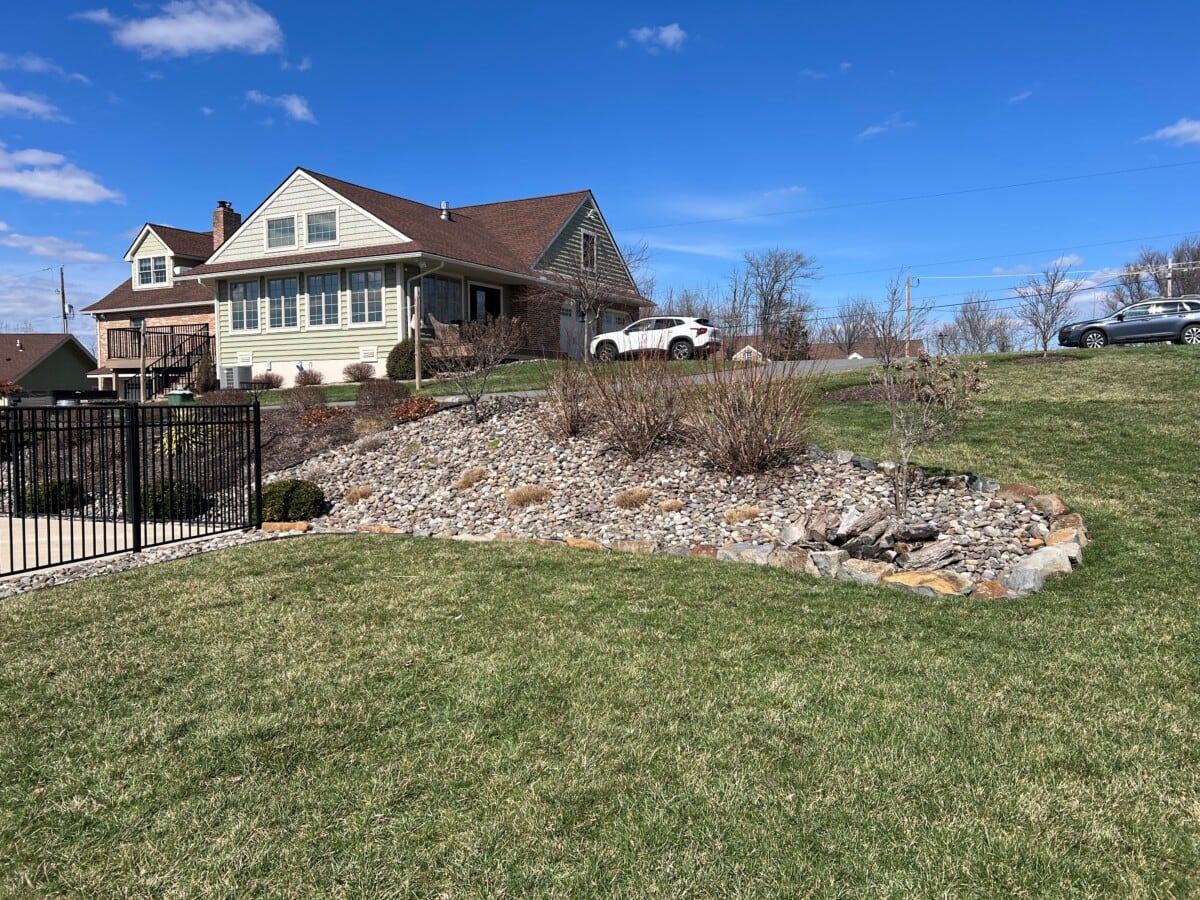
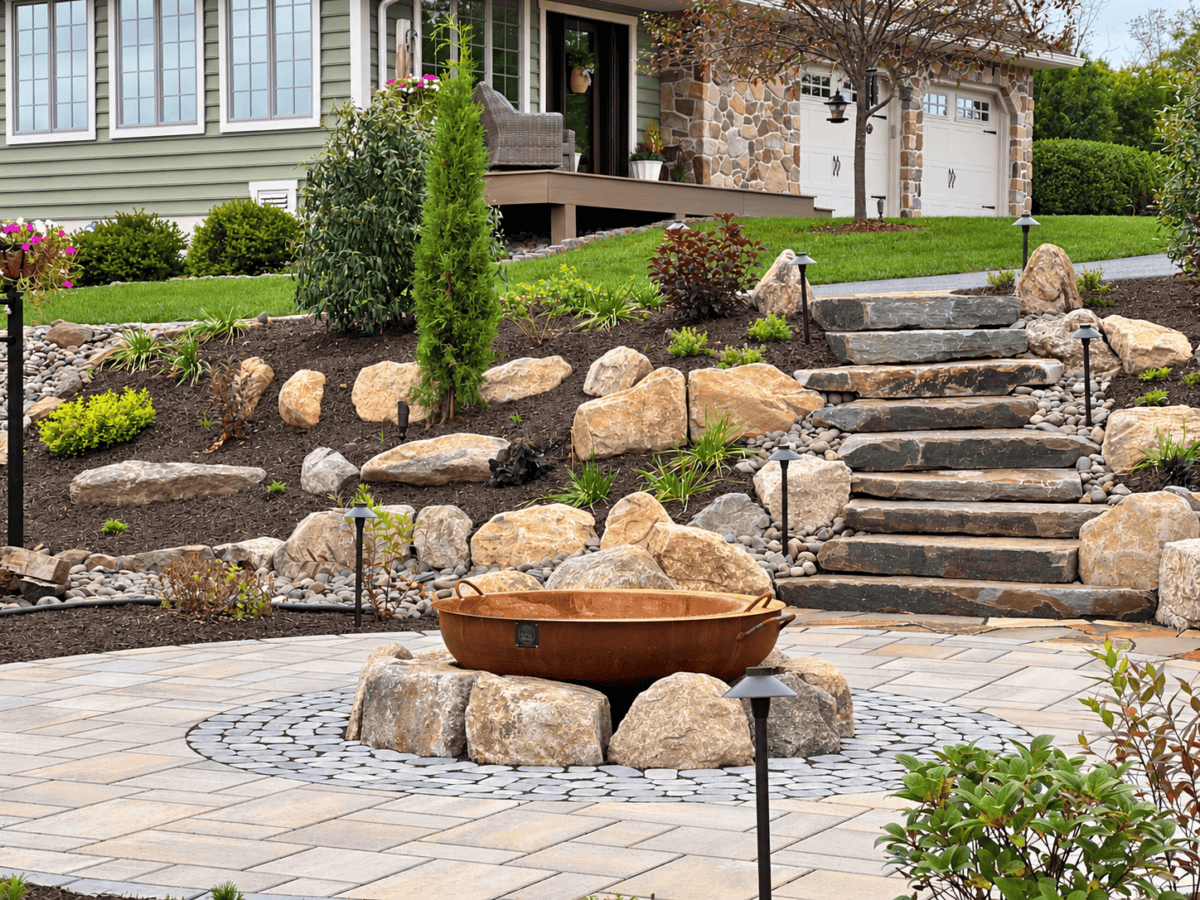
The takeaway: Don’t assume a sloping or challenging backyard limits your possibilities. Thoughtful design can often turn those challenges into opportunities.
3. Think Beyond the Patio
A patio is often the centerpiece of an outdoor living project, but it’s only one part of the picture. The most inviting backyards usually include a combination of features that complement one another.
Consider how these elements might enhance your space:
Walkways and steps provide comfortable connections between different outdoor areas.
Fire pits and outdoor fireplaces create natural gathering places and can extend your enjoyment into cooler weather.
Outdoor kitchens make entertaining more convenient by bringing cooking and food preparation outside.
Retaining and sitting walls can help manage elevation changes, define spaces, and provide additional seating.
Landscape plantings soften hardscaping, provide seasonal interest, and help create privacy.
Outdoor lighting adds ambiance, highlights landscape features, and improves visibility along paths and steps.
Water features introduce movement and sound, creating a relaxing atmosphere.
Not every backyard needs all these features. The goal is to choose the ones that best support how you want to use your space.
It’s also worth thinking about the future. Even if you’re not ready to install an outdoor kitchen or lighting today, planning for utilities and other requirements during the initial design can make future additions easier.
4. Establish a Realistic Budget – and Think about Phasing
One of the most helpful things you can do before beginning a landscape project is establish a comfortable investment range. You don’t need to know exactly what every feature costs. That’s where an experienced landscape designer can help.
But having a general budget in mind allows your designer to recommend materials, features, and layouts that make sense for your priorities.
It’s also important to recognize that the visible features aren’t the only considerations. Site preparation, grading, drainage, foundations, and access for equipment can all affect the scope of a project.
What if You Can’t Do Everything at Once?
You don’t necessarily have to. A comprehensive landscape design, sometimes called a master plan, can help you envision the finished backyard even if construction takes place in stages.
For example, you might install the main patio first, add a fire feature later, and complete the surrounding landscaping and lighting as your budget allows.
The important thing is to plan ahead so that future additions work with what you’ve already installed.
That approach can help avoid unnecessary changes or having to redo completed work.
Want to learn more? Read our article, Why Consider Phasing an Outdoor Living Project?, to see how a master plan can help you work toward your long-term goals.
5. See Your Ideas Come Together with Professional Landscape Design
It’s one thing to imagine a beautiful backyard. It’s another to know how all the pieces will fit together. Professional landscape design helps bridge that gap.
A well-developed plan considers more than appearance. It addresses how people will move through the space, where features should be located, how elevations will be managed, and how the entire landscape will function.
At Whitehouse Landscaping, we offer both 2D and 3D landscape design options, depending on the scope of the project.
A 2D plan provides an overhead view of the proposed layout, including patios, walkways, plantings, and other features.
A 3D design allows homeowners to visualize their outdoor space from different perspectives before construction begins.
This can be particularly helpful when planning larger projects with multiple elevations, gathering areas, or significant changes to the existing landscape.
From Design to Reality: The Pottstown Project
Take a look at our Pottstown project. The 3D rendering helped the homeowners visualize how their backyard could accommodate two separate gathering areas—one for dining and another for relaxing around a fire feature.
The completed project shows how those design ideas became reality, with the patios, steps, landscaping, and seating areas coming together as planned.
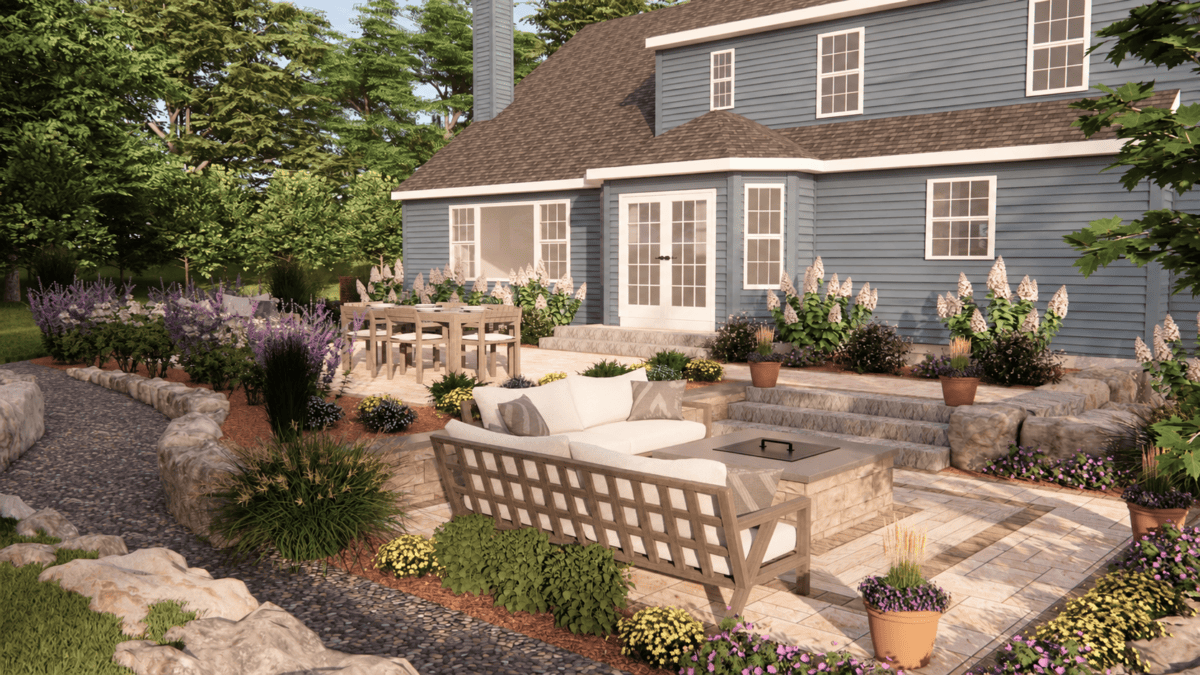
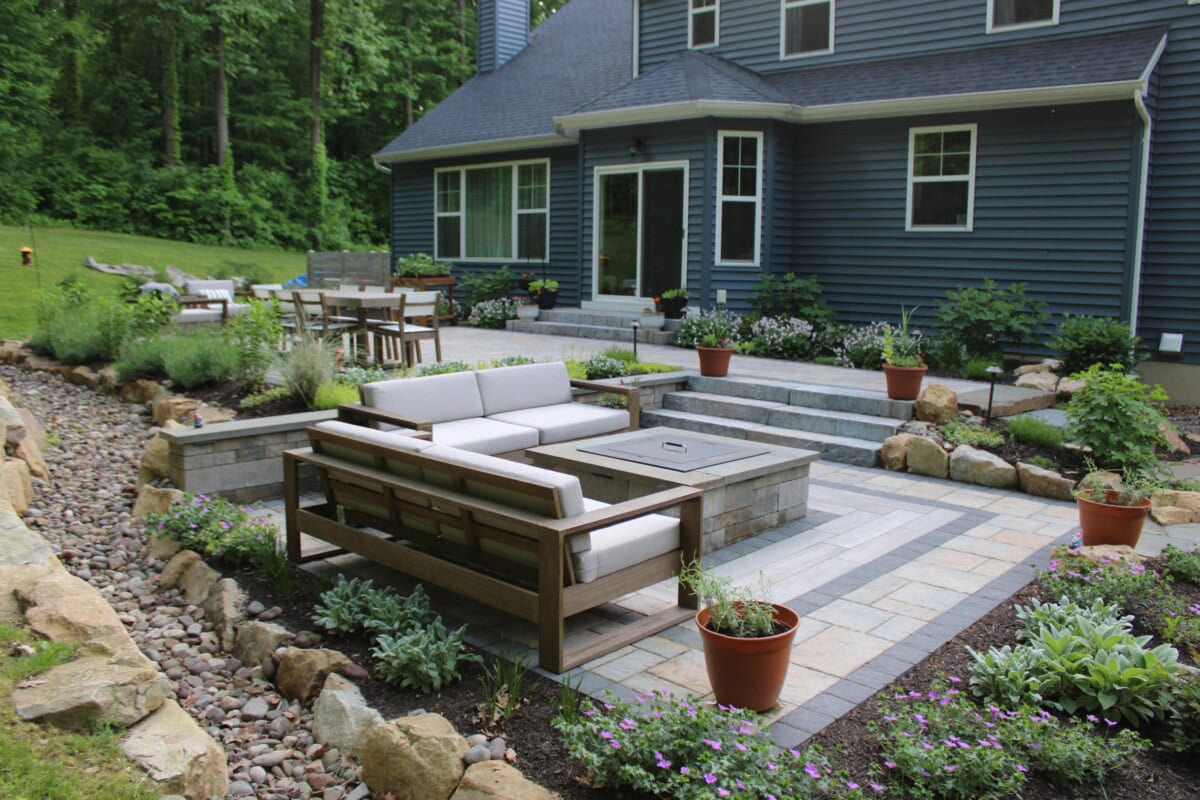
Seeing the proposed design makes it easier to discuss options, refine details, and feel confident about the direction of the project.
Looking for more inspiration? See how different design possibilities can transform the same property in our article, See the Possibilities: How Landscape Design Transforms Backyards.
6. Give Yourself Enough Time to Plan
It’s easy to begin thinking about outdoor improvements when the first warm days of spring arrive.
But if you’re hoping to enjoy a new backyard next summer, planning ahead can make the process much smoother.
Depending on the size and complexity of your project, there may be several steps before construction can begin:
- Initial consultation and evaluation of the property
- Development and refinement of the landscape design
- Selection of materials and features
- Budget review and final decisions
- Permits or approvals, when required
- Scheduling and construction
Larger projects naturally require more coordination than smaller enhancements.
Starting the design process during fall or winter can give you time to explore ideas, make thoughtful decisions, and prepare for the upcoming installation season.
It also helps avoid feeling rushed into choices that you’ll be living with for years.
7. Choose a Landscape Paratner Who Can See the Whole Picture
A successful outdoor living project involves many details, from the initial design and site preparation to the final paver, plant, and lighting fixture. That’s why it helps to work with a company that understands how all these elements come together.
At Whitehouse Landscaping, our design-build-maintain approach allows us to guide homeowners from the initial concept through construction and ongoing landscape care.
We consider not only how your backyard will look when the project is finished, but also how it will function and mature over time.
And because we offer ongoing landscape maintenance, we understand the importance of selecting materials and plantings that make sense for the property and the homeowner’s expectations.
Our goal is to create an outdoor space that feels right for your home, your lifestyle, and the way you want to enjoy it.
Learn more about Our Landscape Design Process and what to expect when working with our team.